
Frozen Shoulder Treatment in Gurgaon: Symptoms, Causes, & Recovery
Is your shoulder pain making your daily tasks like lifting arm, reaching behind back or getting dressed, difficult for you?
What starts as simple shoulder discomfort can lead to stiffness, limited mobility, and poor sleep patterns. Many people assume they have frozen shoulder, but interestingly, not every stiff and painful shoulder indicates this condition.
So it is essential to understand your pain correctly, as an improper treatment approach can result in delayed relief or recurring pain.
Eezalign believes every movement limitation deserves attention.
Read on to learn about frozen shoulder, the irritating shoulder stiffness, and the factors to consider before seeking frozen shoulder treatment.

Early Signs Your Shoulder Needs Attention
Frozen shoulder is not something which happens all of a sudden. It often starts with a nagging ache that is first ignored in many cases, until one day, activities like reaching for a cupboard, putting on a shirt, or fastening clothes become tough to perform.
Here are the warning signs for frozen shoulder:
- Gradually worsening shoulder discomfort: A persistent ache in the shoulder that increases gradually over time.
- Challenges with arm elevation: Activities like reaching above your head or lifting items from a shelf become uncomfortable.
- Difficulty reaching behind: Simple tasks like tucking in a shirt, or accessing your back pocket become challenging.
- Pain while sleeping: Shoulder discomfort may increase when lying on the affected side, interrupting your sleep.
- Limited shoulder mobility: Rotating your arm outward or inward feels increasingly challenging.
- Stiffness after inactivity: Your shoulder may feel particularly tight after sitting still or upon waking up.
What Is Frozen Shoulder (Adhesive Capsulitis)?
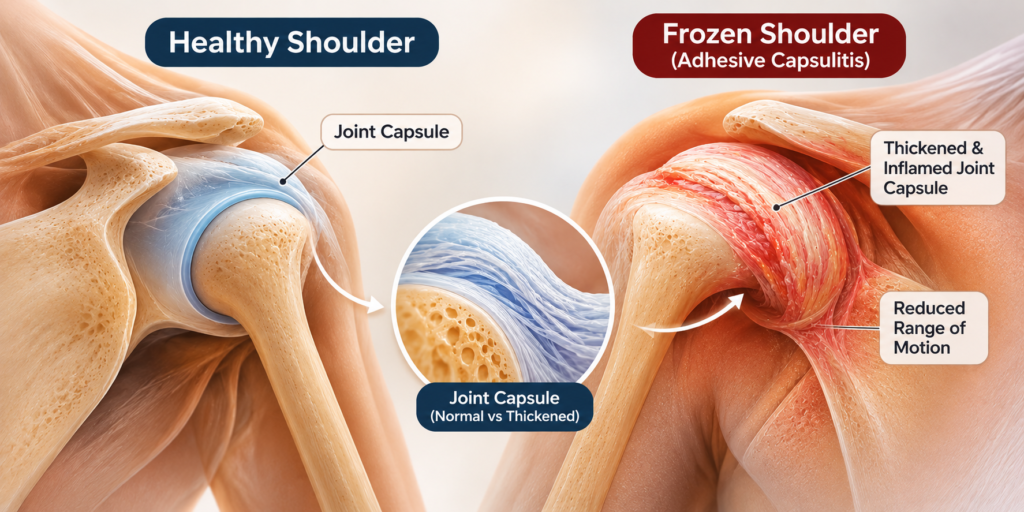
Frozen shoulder, medically known as adhesive capsulitis, is a condition marked by inflammation and thickening of the connective tissue surrounding the shoulder joint, called the joint capsule. As a result, this reduces the capsule’s flexibility and restricts the shoulder’s normal range of motion.
As the condition progresses, the stiffness in the shoulder increases, making everyday activities like lifting, rotating, or extending the arm difficult. Further, this can result in persistent shoulder pain and, in some cases, chronic pain that affects daily activities and quality of life.
In basic terms, frozen shoulder goes beyond simple shoulder pain. It is a condition characterised by gradually increasing stiffness and limited movement in the joint.
Recognising the difference plays a vital role in getting a proper diagnosis and selecting the appropriate treatment for frozen shoulder.
Frozen Shoulder Causes and Risk Factors
Many people think, “I have no injury in my shoulder, but then also, I am having frozen shoulder…why?” That’s a valid inquiry.
Frozen shoulder doesn’t always result from an accident or a specific injury. In many cases, it may happen without any cause.
Below are the risk factors that increase the chances of developing frozen shoulder:
- Diabetes: Individuals with diabetes are more likely to experience adhesive capsulitis.
- Thyroid issues: Both hypothyroidism and hyperthyroidism are found to increase the chances of frozen shoulder.
- Age: People of age 40-60 years are at a high risk.
- Previous injury or surgery: Keeping the shoulder immobilised for an extended period after an injury or surgery can increase the risk.
- Diabetes: Individuals with diabetes are more likely to experience adhesive capsulitis.
- Prolonged Shoulder Immobilisation: Keeping the shoulder still for an extended period after surgery, a fracture or another medical condition can increase the risk.
However, understanding the medical history is also crucial when considering frozen shoulder treatment. Identifying possible contributing factors helps in formulating a more effective approach for addressing shoulder pain and supporting recovery.
Frozen Shoulder Diagnosis: Is It Really Frozen Shoulder or Some Other Type of Shoulder Pain?
Having a stiff shoulder or having movement restrictions in the shoulder doesn’t necessarily mean it’s always a frozen shoulder. Many times, conditions like a rotator cuff injury, shoulder bursitis, arthritis, or even neck issues can create a similar type of pain and limited movement.
So it is important to determine the actual cause of your shoulder discomfort before choosing a treatment method.
A proper diagnosis of frozen shoulder requires more than just knowing the location of the pain.
Things need to be evaluated for a proper diagnosis:
- Active range of motion: The extent to which you can move your arm on your own.
- Passive range of motion: The distance your arm can be moved when softly guided by the examiner. In cases of frozen shoulder, both active and passive range of motion are usually limited.
- Shoulder strength and movement patterns: This helps in detecting any signs indicative of other shoulder issues.
Apart from this, scans like X-rays or MRI can also be recommended to identify problems like arthritis or any injury; however, these tools alone typically do not confirm frozen shoulder.
Why is an accurate diagnosis essential?
An accurate diagnosis is important before starting any treatment so that, through physiotherapy and chronic pain management, the root cause can be targeted and the underlying condition can be treated properly.
Moreover, a detailed assessment helps in preparation of the right treatment plan, improving shoulder motion and supporting healing.
So, if you are looking for a shoulder pain specialist in Gurgaon or a nearby physiotherapy clinic, make sure it does not just focus on the painful area, but also on the root cause of your pain
Conclusion
Is your shoulder discomfort truly frozen shoulder, or could your body be pointing towards something different?
Not all movement limitations stem from the same issue, and merely addressing the painful area may overlook the larger concern.
This is where Eezalign adopts a unique strategy. Instead of examining the shoulder on its own, Eezalign closely examines the relationship between your posture, movement habits, and overall body alignment that may be causing the issue.
The goal is to address the underlying cause first, then create personalised care catered to your body’s requirements.
Whether you’re looking for a frozen shoulder assessment, shoulder pain therapy, non-surgical treatment, or shoulder physiotherapy in Gurgaon, start with a method that considers more than symptoms and aims for lasting improvement.
Your healing journey begins with a better understanding of your body. Schedule your appointment at Eezalign today.
Frequently Asked Questions
Ordinary stiffness often goes away with slow movement, while frozen shoulder usually causes long-term or continuous movement restrictions in shoulder movement.
Inflammation and sensitivity around the shoulder joint can make certain positions uncomfortable, especially when lying on the affected side.
Yes. Frozen shoulder can develop gradually without any specific injury, although factors such as diabetes, thyroid disorders and prolonged shoulder immobilization can elevate the risk.
Yes, as shoulder mobility decreases, performing daily tasks that involve lifting or rotating your arm can become more challenging.
The recovery time for frozen shoulder can vary widely. It may range from several months to a few years, depending on the severity, stage, and individual response to treatment.
Many people improve with non-surgical approaches, including appropriate physiotherapy and medical management. Surgery is usually considered only if significant symptoms continue despite other treatments.
Yes. Physiotherapy for frozen shoulder can assist in alleviating discomfort and gradually enhancing mobility. The exercises and their intensity should correspond to your recovery stage.
Gentle, suitable movement is typically recommended, but you should avoid intense stretching or exercises that result in considerable pain. A physiotherapist can provide guidance on what is appropriate.
Yes. Both diabetes and thyroid disorders are associated with a higher risk of adhesive capsulitis. Share your medical history during your assessment.
Yes. Irritation or problems in the neck can create pain in the shoulder. A proper assessment helps distinguish neck-related pain from shoulder conditions.