01
Spinal Movement & Mobility
Assess spinal movement, stiffness, and relevant factors associated with back pain or neck pain .

Healing Through Alignment

Rediscover your body’s natural balance and strength with osteopathy.
We treat more than just pain – we treat the root cause. Osteopathy is a gentle, hands-on approach that restores your body’s structure and function, helping you move better, feel stronger, and live pain-free.
Osteopathy is a holistic manual therapy that focuses on the musculoskeletal system – your bones, muscles, joints and connective tissue – and how it affects your overall health. By using precise techniques like stretching, joint mobility, and gentle manipulation, our osteopaths help your body restore its natural alignment and function.
Why choose osteopathy?
We are posture experts. Our osteopaths evaluate your entire structure to detect imbalances and misalignments that may be causing chronic pain, fatigue or stiffness.
Osteopathy uses no drugs or invasive procedures. It’s safe, effective and tailored to your comfort and condition.
We don’t just treat where it hurts – We look at how the whole body moves and functions. This leads to long-lasting relief and improved overall well-being.
We believe osteopathy plays a key role in correcting posture-related dysfunctions and restoring symmetry to your life.
Stiffness, recurring pain, or movement that doesn’t feel right?
Take the first step towards understanding your body and finding the right care.
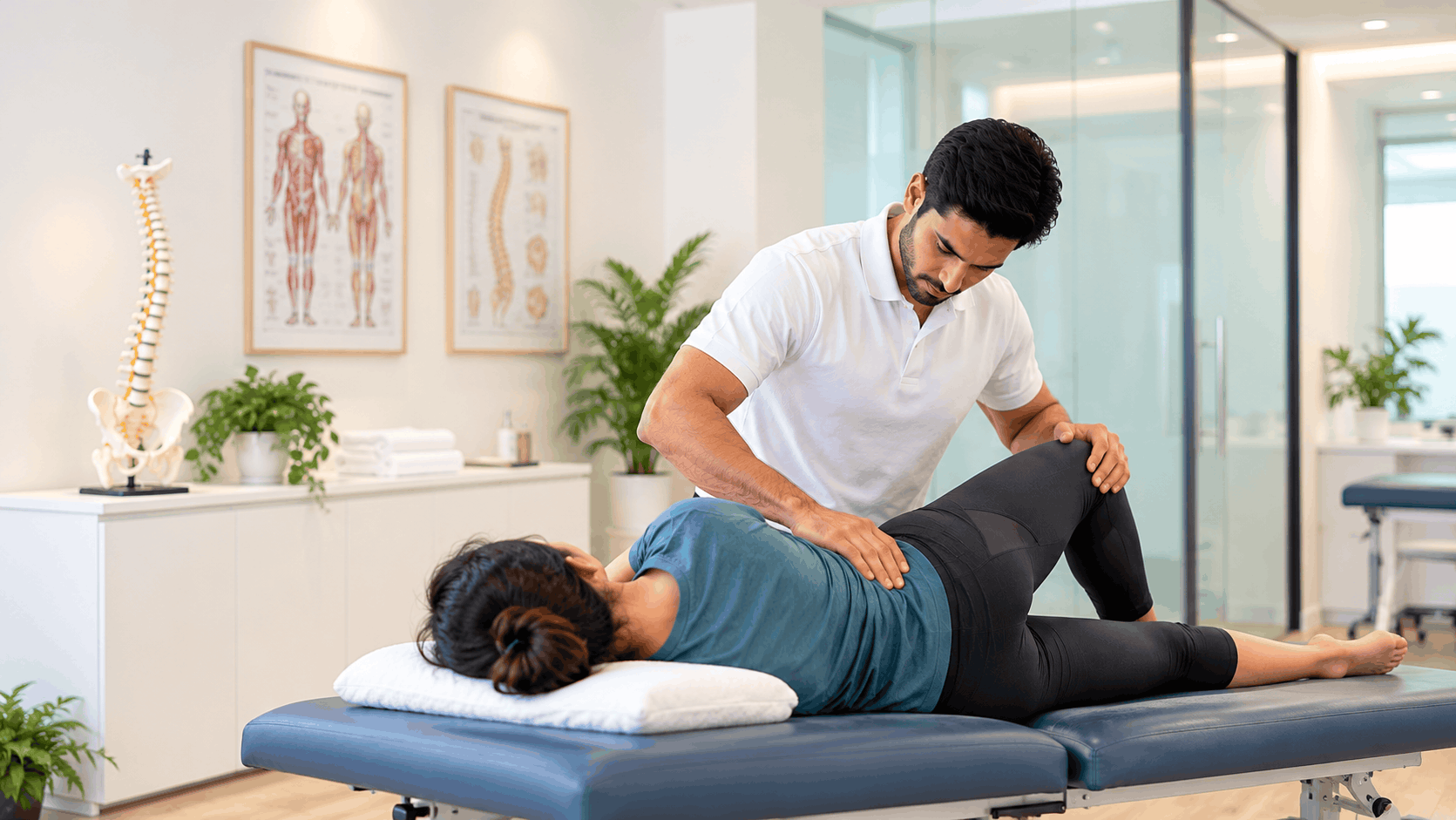
Osteopathy is a hands-on approach to understand how your muscles, joints, posture, and movement work together. Instead of looking only at the area that hurts, osteopathic treatment considers how different parts of your body may be contributing to your discomfort.
For example, recurring back pain may not be linked to your lower back alone. Stiff hips, restricted joint mobility, or everyday movement habits may also play a role in how you feel and move.
Eezalign provides an osteopathy assessment comprising a study of your posture, joint mobility, movement patterns, and symptoms before shaping a personalised treatment plan. Depending on your needs, osteopathy treatment may include hands-on therapy, movement guidance, and therapeutic exercises to support better mobility, comfort, and everyday function.
Examine your posture, joint mobility, movement, medical history, and areas of discomfort to understand what may be contributing to your pain.
Look for relevant stiffness, movement restrictions, and muscular or joint-related difficulties that may be affecting your daily activities.
Create a tailored plan using hands-on techniques, mobility exercises, movement guidance, and suitable rehabilitation approaches.
Monitor your response to treatment and adjust the plan according to your progress and changing needs.
If pain keeps returning, stiffness limits your movement, or everyday activities feel harder than they should, an osteopathic assessment may help you understand what's happening. It may be worth considering for:
Osteopathy isn't the right solution for every condition. An assessment helps determine whether hands-on treatment is appropriate or whether physiotherapy, medical evaluation, or another approach would better suit your needs.
Osteopathy looks beyond the painful area to understand how your joints, muscles, posture, and movement may be contributing to your symptoms.
Assess spinal movement, stiffness, and relevant factors associated with back pain or neck pain .
Examine relevant movement restrictions when assessing headaches and migraines or shoulder pain .
Assess joint mobility and movement patterns, including concerns associated with pelvic imbalance .
Examine relevant movement difficulties affecting the knees and feet, including knee problems and foot problems .
Review your symptoms, previous injuries, health history, and any warning signs that require further medical evaluation.
Use the findings to determine whether osteopathy, exercises, physiotherapy, or other care is appropriate.
When muscular tension, joint stiffness, or movement restrictions contribute to your discomfort, appropriate osteopathic care may help you:
Work towards easier, more comfortable movement when stiffness limits your everyday activities.
Work on restrictions that make bending, turning, reaching, or walking difficult.
Improve awareness of how your body moves and address relevant difficulties associated with postural imbalance .
Combine appropriate hands-on treatment with exercises and physiotherapy when your needs call for a broader approach.
Learn which factors may be contributing to your discomfort and what you can do to support your progress between sessions.
Your symptoms and medical history should be reviewed before deciding whether osteopathy is appropriate.
The techniques used depend on your condition, movement, comfort, and individual treatment goals.
Osteopathy may help with certain musculoskeletal problems, but results depend on the cause of your symptoms and the evidence for treating that condition.
Some conditions require modified techniques, medical evaluation, or alternative care rather than manual treatment.
Not every symptom comes from muscles or joints. AVN and joint pain, menstrual discomfort, and digestive issues need appropriate assessment rather than being automatically attributed to movement restrictions.
Follow-up helps assess how you're responding and whether your treatment plan needs to change.
Recurring discomfort, stiffness, or restricted movement shouldn’t be left to guesswork. Get assessed, understand what’s contributing to your symptoms, and take the next step towards better movement.
TAKE THE FIRST STEP — BOOK YOUR ASSESSMENT
EEZALIGN — Human Posture Experts
Osteopathy is a hands-on approach that assesses and treats problems affecting muscles, joints, and movement. It may help relieve certain types of musculoskeletal discomfort and improve mobility, depending on the cause.
Osteopathy may help with certain types of recurring back pain by addressing relevant joint stiffness and movement difficulties. Your assessment helps determine whether hands-on treatment is suitable for you.
Long hours at a desk can contribute to neck stiffness and discomfort. Osteopathy may help in suitable cases, alongside movement exercises and changes to your daily habits.
Your practitioner assesses your symptoms, posture, movement, joint mobility, and medical history before recommending treatment. A session may include hands-on techniques, exercises, or movement advice, depending on your needs.
Osteopathic techniques should be adapted to your comfort and condition. Some people experience temporary soreness, but sharp or unusual pain should be reported to your practitioner.
Osteopathy often considers how muscles and joints work together, chiropractic commonly emphasizes spinal and joint adjustments, and physiotherapy focuses strongly on rehabilitation and movement. Their methods overlap, and the right choice depends on your condition.
It depends on your symptoms, the underlying cause, and your response to treatment. Your practitioner should review your progress and explain whether further sessions are likely to help.
It may help with certain musculoskeletal problems contributing to shoulder or neck discomfort. Headaches and pelvic pain can have different causes, so appropriate assessment is essential before choosing treatment.
Osteopathy is not suitable for every condition, and some techniques need to be avoided or modified for certain health problems. Share your medical history and seek medical evaluation when symptoms suggest a more serious condition.
Eezalign offers personalised assessment of posture, joint mobility, and movement in Gurgaon to guide appropriate care. Book an osteopathy assessment to discuss your symptoms and explore suitable treatment options.

Copyright © 2025 EEZALIGN / All Rights Reserved
Book Appointment