01
Spinal Alignment & Curvature
Examine visible asymmetry, shoulder and waist levels, and spinal movement to identify signs that may require further evaluation.

Realign, Rebuild, Restore.

What is Scoliosis?
Scoliosis is a condition where the spine curves sideways, forming a “C” or “S” shape. This can lead to posture imbalances, uneven shoulders or hips, chronic back pain, and even respiratory issues if left untreated. Scoliosis affects people of all ages, but early intervention is key to preventing its progression.
We don’t just treat scoliosis – we correct it, addressing the root causes of spine misalignment and muscular imbalance.
We combine evidence-based techniques with advanced posture science to correct scoliosis and improve spine symmetry. Our multi-disciplinary approach blends:
Advanced digital analysis to map spinal curvature and muscular compensation.
Gentle, precise spine realignment to restore natural curvature and reduce nerve compression.
Muscle re-education, stretching and strengthening exercises to stabilize the spine.
Manual therapy to enhance mobility, improve circulation, and relieve deep-seated restrictions.
Uneven shoulders, tilted waist, or a visible curve in back!
Don’t wait for discomfort or changes in your posture to become harder to manage. Get assessed now to understand your spine and the care you may need.
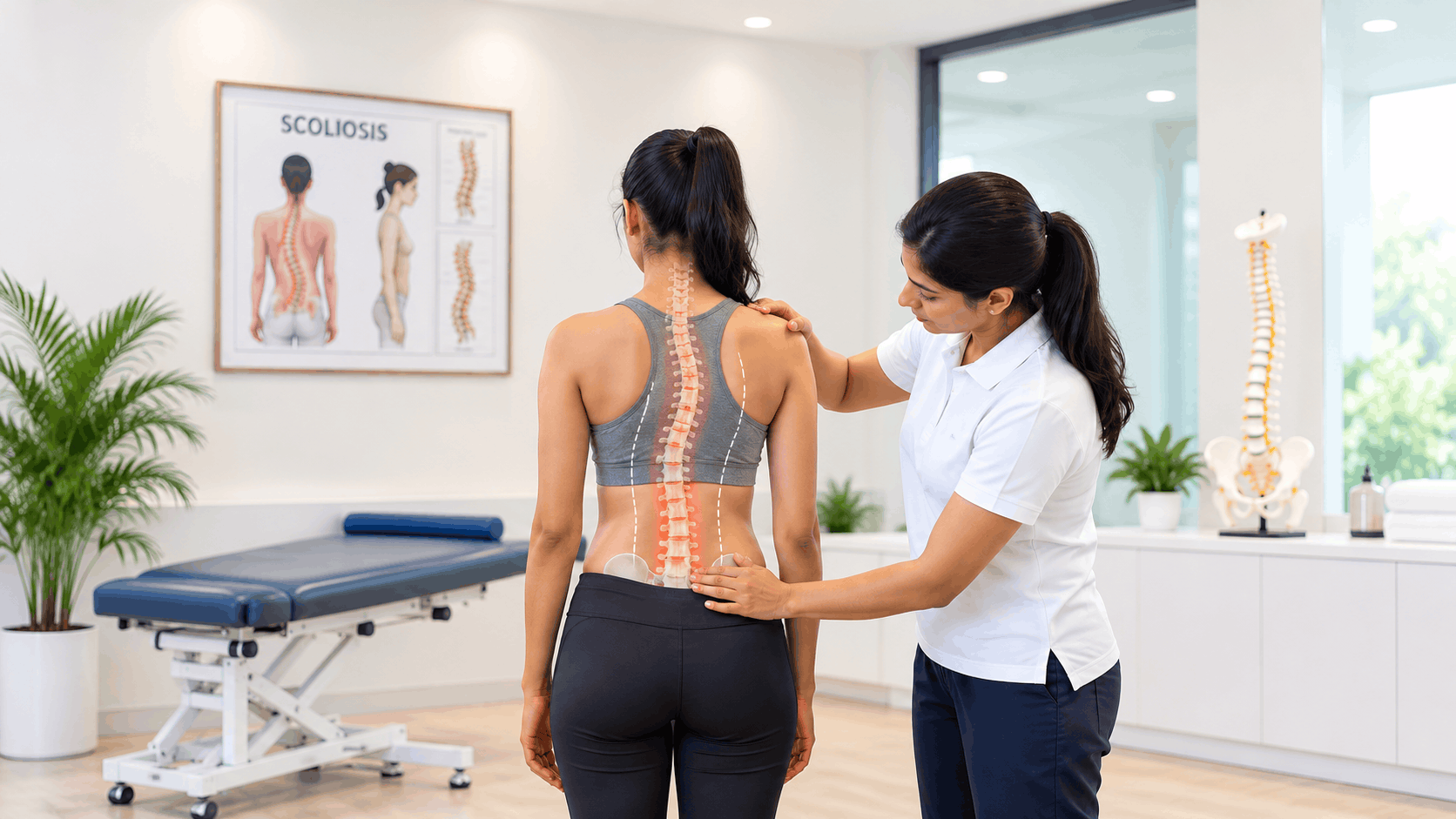
Scoliosis is a condition where the spine curves sideways and may also twist, changing the natural shape of the back. It often develops during childhood or teenage years, but adults can also develop scoliosis or experience changes in an existing curve.
You may notice uneven shoulders, one shoulder blade sticking out more, an uneven waist, or one side of your back appearing higher when you bend forward. Some people have no pain, while others experience discomfort or difficulty moving comfortably.
At Eezalign, we assess your posture, spinal alignment, and movement to understand your concerns. If you notice these signs, our assessment can help determine whether scoliosis may be present and whether you need further medical evaluation or imaging before choosing the right care.
Examine your posture, spinal alignment, movement, medical history, and symptoms to understand your needs.
Look for visible asymmetries, movement restrictions, and functional difficulties that may be associated with your spinal curve.
Develop an appropriate care plan that may include targeted exercises, mobility work, posture guidance, and physiotherapy, depending on your assessment.
Review your symptoms, movement, and functional progress, with referral for specialist evaluation or imaging when needed.
If you've noticed changes in your posture, uneven body alignment, or difficulty moving comfortably, our scoliosis assessment will help you identify your concerns and guide the right care. It may be beneficial for:
Not every uneven shoulder or curved-looking back indicates scoliosis. An assessment helps determine whether the signs warrant further investigation and which care options are appropriate.
A scoliosis assessment looks beyond the visible curve to understand spinal alignment, physical function, symptoms, and whether further investigation is needed.
Examine visible asymmetry, shoulder and waist levels, and spinal movement to identify signs that may require further evaluation.
Assess relevant movement limitations and associated neck pain or headaches and migraines .
Evaluate uneven shoulders, prominent shoulder blades, and rib prominence that may be associated with spinal rotation.
Examine pelvic positioning and relevant movement patterns, including concerns related to pelvic imbalance , knee problems , or foot problems .
Review pain, functional difficulties, previous diagnoses, and any changes that may indicate the need for further medical assessment.
When scoliosis affects movement, comfort, or daily function, an appropriate treatment plan may help you:
Work towards better mobility and more comfortable everyday movement.
Improve postural awareness and functional control when dealing with postural imbalance .
Work on movement difficulties that may affect your shoulders, hips, knees, or feet, with appropriate care for shoulder pain and knee problems where relevant.
Understand your assessment findings, track relevant changes, and know when further medical evaluation is needed.
If you notice a spinal curve, get it assessed in detail before deciding which treatment is right for you.
Your age, curve severity, symptoms, and whether the curve is changing all help determine the right approach.
Physiotherapy and scoliosis-specific exercises can improve movement and function, but they cannot guarantee that the spinal curve will straighten.
Some people need regular monitoring, while others may need bracing or specialist care. Severe or progressing curves may require a surgical opinion.
Not every symptom is caused by scoliosis. Problems like AVN and joint pain, menstrual discomfort, or digestive issues need their own assessment rather than being automatically linked to spinal curvature.
Regular check-ups help track changes in your condition and determine whether your treatment plan needs to be adjusted.
Get your spine assessed, understand what may be happening, and explore the right next steps for your condition.
TAKE THE FIRST STEP — BOOK AN APPOINTMENT NOW
Eezalign — Human Posture Experts
Uneven shoulders, a tilted waist, or one side of your back appearing higher may indicate scoliosis. A professional assessment helps distinguish a structural spinal curve from postural imbalance.
Yes, scoliosis can contribute to back discomfort and muscle fatigue during daily activities, although many people have no pain. An assessment helps identify possible causes of your symptoms.
Uneven shoulders, hips, or waistlines can be signs of scoliosis, but they can also result from other postural differences. A clinical assessment helps determine whether further investigation is needed.
Some spinal curves remain stable, while others progress, especially during periods of growth. Early assessment helps determine whether monitoring or treatment is needed.
Non-surgical scoliosis treatment may help improve movement, strength, and comfort, and selected approaches may help manage curve progression. The right treatment depends on your age, curve severity, and individual needs.
Physiotherapy and scoliosis-specific exercises can improve strength, mobility, and functional control. They cannot guarantee that a structural spinal curve will straighten.
Recurring back pain can have several causes, including muscle strain, movement difficulties, or spinal conditions. A proper assessment helps identify contributing factors and guide suitable treatment.
If your child has uneven shoulders, a prominent shoulder blade, or a visible spinal curve, arrange a clinical assessment. Early evaluation is especially important during growth spurts.
It depends on the spinal curve, your symptoms, and treatment goals. Comfort and movement may improve over time, while changes in the curve require appropriate monitoring.
Eezalign offers personalised assessment of spinal alignment, posture, and movement in Gurgaon. Book a spine assessment to understand your condition and explore suitable treatment options.
Copyright © 2025 EEZALIGN / All Rights Reserved
Book Appointment