Scoliosis Treatment Without Surgery:
A Structural Approach to Better Posture and Movement
Your spine plays a crucial role in helping you stand, move, and maintain balance. But what happens when it begins to curve in an unusual way?
You might notice that one shoulder sits higher than the other, your waist appears uneven, or your body leans slightly to one side, even though you feel perfectly fine. These changes can occur with scoliosis, a condition where the spine develops a sideways curve and may also rotate.
For some individuals, scoliosis can lead to back pain, stiffness, poor posture, or chronic pain. However, this condition does not always require surgery.
Treatment options for scoliosis can vary depending on the individual case and may include physiotherapy, scoliosis-specific exercises, and personalized rehabilitation plans. Recent research supports these non-surgical approaches for certain patients, although outcomes can differ based on the severity of the curve and individual characteristics.
The key takeaway:
It’s important to understand the body before deciding on how to treat the curvature.
Managing Scoliosis Without Surgery
When people hear the term “scoliosis,” the first thing that often comes to mind is the fear of surgery. However, treatment doesn’t always begin there.
The best approach to scoliosis treatment is tailored to the individual rather than focusing solely on the spinal curve. Factors such as age, severity of the curve, symptoms, physical growth, whether the curve is progressing, and how it impacts daily activities all play a role in deciding the right course of action.
For many individuals, a scoliosis treatment without surgery may involve regular monitoring, scoliosis-specific physiotherapy, targeted exercises, strength training, and rehabilitation.
In some cases, bracing may also be advised for children and teenagers who are still growing.
Importantly, the goal isn’t just to “straighten” the spine. It’s about enhancing overall movement, managing symptoms, and improving daily function.
Treatment may concentrate on helping the person to:
- Move more comfortably
- Boost strength and muscle control
- Develop better postural awareness
- Enhance balance and coordination
- Manage pain or stiffness
- Perform everyday tasks with greater ease
- Maintain functionality as the body grows and changes
How Physiotherapy, Chiropractic Care, and Structural Rehabilitation Help With Scoliosis
Scoliosis can look and act differently in each person. This means treatment should focus on the individual’s curve, symptoms, and movement patterns instead of following a standard routine.
Physiotherapy for Scoliosis
Physiotherapy for scoliosis aims to improve strength, movement control, flexibility, balance, and daily activities.
It may include:
- Therapeutic exercises
- Awareness of breathing and movement
- Strength and stability training
- Postural control
- Scoliosis-specific exercises
- Functional movement training
- Techniques like Schroth focus on each person’s spinal curve and movement instead of using the same exercises for everyone.
Chiropractic Care for Scoliosis
What about chiropractic care for scoliosis?
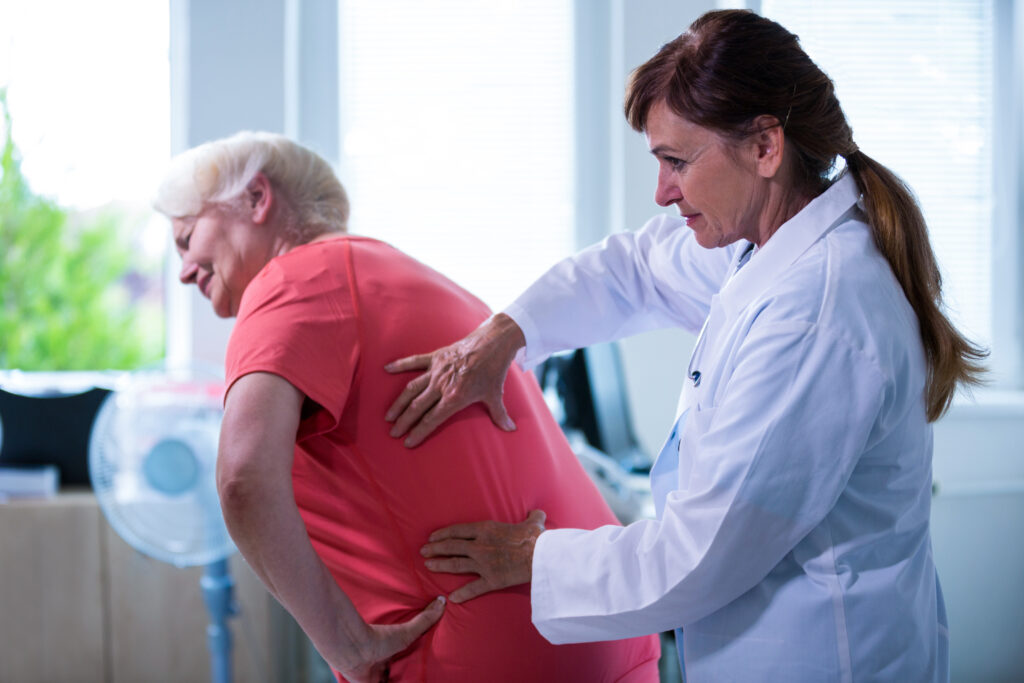
When appropriate, chiropractic or manual therapy can be part of a complete rehabilitation plan. It can help relieve back pain, stiffness, and discomfort from movement, rather than just trying to straighten the spine.
Structural Rehabilitation Support
Structural rehabilitation examines how the spine, pelvis, shoulders, and other body parts function together.
It emphasises how posture, alignment, and movement affect daily life, not just the curve.
The key point is simple:
There is no one-size-fits-all treatment for scoliosis.
A good rehabilitation plan should be customized for the individual, not just based on a diagnosis in a report.
How Scoliosis can Change the Way the Body Moves
Many scoliosis patients miss that the curve in the spine is only one part of the story. This means that when spinal alignment changes, the rest of the body can show the effects. It often adapts to keep you balanced and moving.
The shoulders, pelvis, trunk, and muscles may start working differently. One side may take on more of the load, while the other may contribute less. Over time, these changes can become part of your usual movement pattern without you even realising it.
A person with scoliosis may notice changes in:
The body is always trying to find its balance.
- Shoulder or pelvic alignment
- Weight distribution between both sides
- Muscle strength and control
- Trunk rotation
- Balance and coordination
- Walking and standing patterns
- How the hips, pelvis and shoulders work together
Can Scoliosis Cause Back Pain?
Yes, it can.
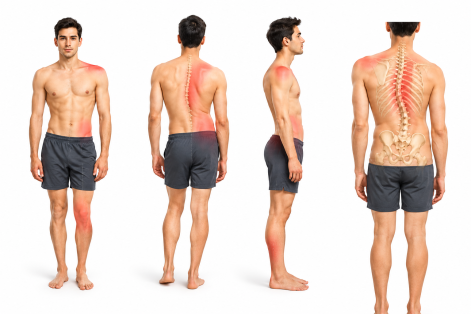
Some people with scoliosis may not experience any pain at all, while others might suffer from chronic back pain, sudden back pain, stiffness, or muscle fatigue. The symptoms can vary based on factors such as age, activity levels, muscle conditioning, and individual movement patterns.
Discomfort may sometimes be felt away from the spine, particularly around the hips or shoulders.
This is why scoliosis and back pain should not be considered separately. An effective scoliosis rehabilitation approach takes into account the whole body’s posture, alignment, movement, and function, rather than focusing solely on the location of the pain.
What does Scoliosis Physiotherapy and Structural Rehabilitation actually involve?
If you’ve recently been diagnosed with scoliosis, you might be asking yourself, “What comes next?”
Do you just need to do some exercises? Should you focus on improving your posture? Can physiotherapy really make a difference? And how can you determine which treatment is best suited for your unique body?
The journey begins with one crucial step: assessment.
Scoliosis affects everyone differently, which means that treatment shouldn’t start with a one-size-fits-all exercise plan. Instead, it should begin with a thorough understanding of your spine, posture, movement, and how your entire body functions as a cohesive unit.
Assessment is Key Before Treatment
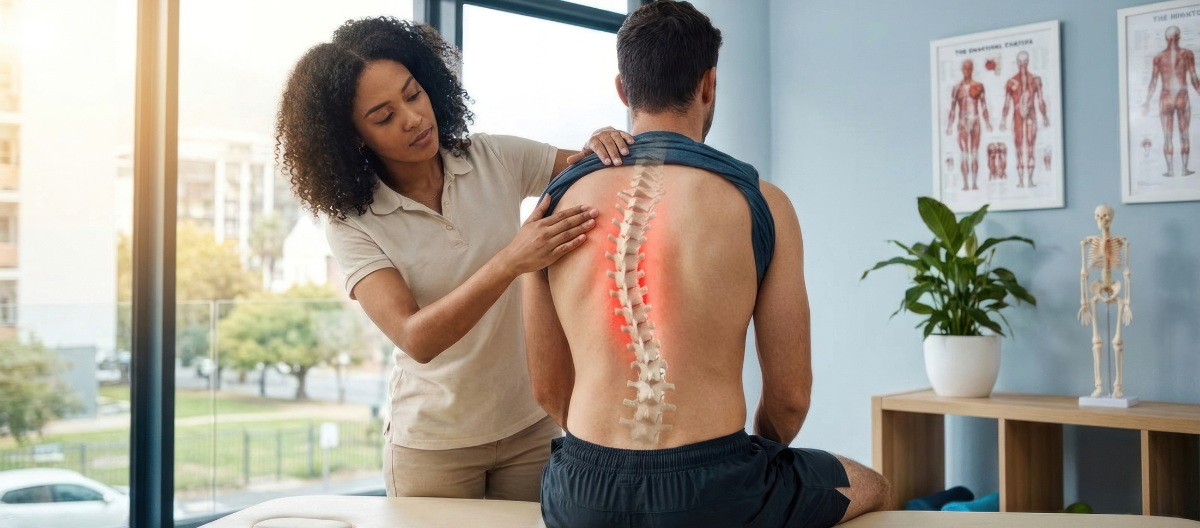
Before diving into physiotherapy for scoliosis, a comprehensive assessment is essential. This may involve evaluating your spinal alignment, standing posture, weight distribution, walking patterns, joint mobility, muscle strength, balance, and coordination.
It also examines how your spine, pelvis, hips, and shoulders interact with one another.
Scoliosis can alter the way you carry yourself. You might find yourself leaning slightly to one side, favoring one leg over the other, or holding your shoulders in a different position. Over time, these changes can lead to poor posture, stiffness, back pain, or difficulties with movement.
Two people may have a similar-looking spinal curve but completely different movement patterns.
Can Scoliosis Cause Back Pain?
Before diving into physiotherapy for scoliosis, a comprehensive assessment is essential. This may involve evaluating your spinal alignment, standing posture, weight distribution, walking patterns, joint mobility, muscle strength, balance, and coordination.
It also examines how your spine, pelvis, hips, and shoulders interact with one another.
Scoliosis can alter the way you carry yourself. You might find yourself leaning slightly to one side, favoring one leg over the other, or holding your shoulders in a different position. Over time, these changes can lead to poor posture, stiffness, back pain, or difficulties with movement.
Two people may have a similar-looking spinal curve but completely different movement patterns.
The curve may be similar, the body around it may not be.
What Does Structural Rehabilitation Focus On?
Once the assessment is complete, the rehabilitation plan is built around what the individual actually needs. It may focus on:
- Targeted physiotherapy and scoliosis-specific exercises to improve strength, mobility and movement control.
- Movement and postural retraining to help the body develop better awareness and control during everyday activities.
- Strength, stability and functional training to help the body handle daily physical demands more efficiently.
- Manual and structural techniques, when appropriate, to support comfortable movement and address relevant restrictions.
For someone dealing with chronic pain or back pain, this approach can also help identify movement patterns that may be contributing to discomfort.
With appropriate assessment, treatment and medical monitoring, non-surgical scoliosis rehabilitation may help manage symptoms and function and, in some cases, support efforts to avoid or delay more invasive treatment. However, severe or progressive curves may still require specialist medical care.
Scoliosis Treatment Without Surgery Starts With the Right Understanding
Scoliosis goes beyond just a curved spine; it can deeply affect your daily life by influencing your posture, movement, and balance. What may start as a minor posture concern can evolve into issues like stiffness, poor posture, or chronic back pain.
This is why effective non-surgical treatment must consider more than just the curve itself.
At EEZAlign, we focus on the intricate relationship between posture, structure, and movement. As experts in human posture, we take the time to understand how scoliosis impacts your entire body, tailoring rehabilitation to fit your unique needs rather than applying a one-size-fits-all approach.
If you’re seeking scoliosis treatment or physiotherapy in Gurgaon, or if you’re looking for support with ongoing back pain and posture challenges, the first step is to truly understand what’s happening in your body.
Treating scoliosis isn’t merely about addressing the curve; it’s about enhancing your body’s overall function and well-being.
This is where EEZAlign’s personalised structural approach truly makes a difference.
Frequently Asked Questions
Yes, physical therapy for scoliosis is an important non-surgical treatment that focuses on strength, movement control, posture, balance, and symptom management.
Scoliosis treatment without surgery includes physiotherapy, scoliosis-specific exercises, strength training, and personalized rehabilitation based on the individual’s condition.
Chiropractic care for scoliosis can be incorporated into rehabilitation to help manage associated back pain, stiffness, and movement restrictions.
Osteopathy for scoliosis focuses on movement, mobility, muscle tension, and posture-related discomfort as part of a comprehensive treatment approach.
Medicines can help manage pain when prescribed by a doctor, while physiotherapy for scoliosis pain relief addresses strength, mobility, movement, and functional limitations.
Yes, scoliosis physiotherapy for poor posture works on postural awareness, muscle control, balance, alignment, and functional movement.
Scoliosis-specific exercises are selected according to the individual’s spinal curve, symptoms, strength, and movement pattern rather than following a standard exercise routine.
Yes, scoliosis can be associated with chronic back pain, hip discomfort, stiffness, and leg symptoms, making proper assessment important before starting treatment.
Uneven shoulders or hips, a visible spinal curve, or leaning to one side can be signs of scoliosis; a professional assessment can confirm the condition and guide timely treatment.
EEZAlign Clinic in Gurgaon provides personalized scoliosis physiotherapy, structural rehabilitation, and movement-focused treatment based on individual assessment.